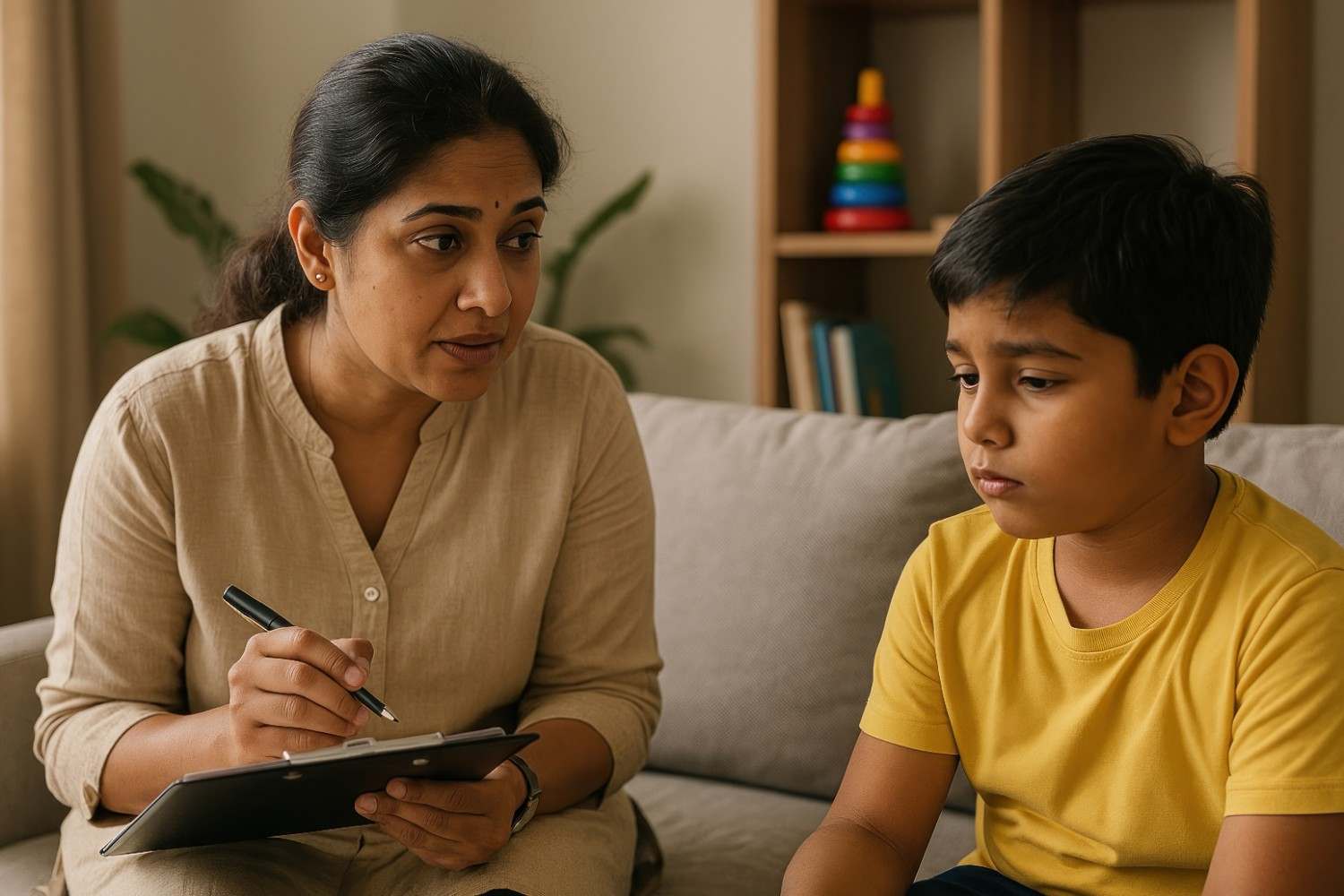
“Look at how well the neighbour’s daughter is doing.” “Your cousin scored 95% — why can’t you?” Most parents have said some version of this at least once, and most students have heard it more than once. It usually comes from a good place — parents want their children to do well, and comparison feels like a natural way to show them what’s possible.
But here’s the question worth pausing on: does comparing a child to others actually help them do better, or does it just make them feel worse without changing the outcome?
This blog isn’t about blaming parents — comparison is a very human habit, and almost every parent does it at some point. Instead, it’s about understanding why it happens, what it actually does to a child’s confidence and motivation, and what parents can do differently to get the results they’re hoping for in the first place.
Before looking at the effects, it helps to understand why this happens so often. It’s rarely about being unkind — it usually comes from genuine concern.
Understanding this matters, because the goal isn’t to stop caring about a child’s progress. It’s to find a better way to encourage it — one that doesn’t quietly work against the very outcome parents are hoping for.
Here’s where things get tricky. Comparison, even when well-intentioned, often doesn’t produce the results parents expect.
In the moment, comparison can feel like pressure to “prove” something. Some students do respond by studying harder for a short period. But this reaction usually comes from a place of anxiety, not genuine motivation.
Over time, repeated comparison tends to do the opposite of what’s intended:
A student who hears “why can’t you be like them” repeatedly doesn’t usually think, “I should work harder.” More often, they think, “I’m not good enough” — and that belief can quietly follow them well beyond their PU years.
It’s worth being clear that competition itself isn’t the problem. Healthy competition can actually be a good thing — it’s the unhealthy comparison that causes harm.
Aspect | Healthy Competition | Unhealthy Comparison |
Focus | On the child’s own improvement over time | On another student’s marks, rank, or achievements |
Language used | “How can you improve on your last score?” | “Why can’t you score like them?” |
Emotional effect | Encourages effort and self-belief | Creates anxiety, guilt, or resentment |
What it teaches | Progress is personal and ongoing | Worth is measured against others |
Long-term outcome | Builds intrinsic motivation | Builds fear of judgment or failure |
Relationship impact | Strengthens trust between parent and child | Creates distance and reluctance to share struggles |
The difference isn’t about whether a parent expects effort or improvement — it’s about where the reference point comes from. Healthy competition looks inward, at the child’s own journey. Unhealthy comparison looks outward, at someone else’s.
One thing that often gets lost in comparison is that no two students learn, think, or grow at the same pace — and that’s completely normal.
When a parent compares a child to a topper in another subject or stream, they’re often comparing two very different learning styles, not two different effort levels. This comparison, however well-meant, misses the point entirely.
Comparison doesn’t stop at report cards — it often extends further, and each stage carries its own impact.
A common example: a PU student passionate about commerce is repeatedly compared to a relative who chose engineering and is “doing better financially.” Over time, the student may start doubting a path they were originally confident about — not because it was the wrong choice, but because comparison made it feel like the wrong choice.
Perhaps the most overlooked effect of comparison is what it does to trust between a parent and child.
This is often the opposite of what parents actually want. Most parents compare because they care deeply — but if comparison creates distance instead of connection, it becomes harder to guide a child effectively during the years they need support the most, especially during PU, which comes with real academic and emotional pressure.
The good news is that motivation doesn’t have to come from comparison at all. Here are ways to encourage a child that focus on them, not someone else.
This is often when comparison shows up the most — but it’s also when it does the most damage.
Progress-based thinking shifts the entire conversation from “how do you measure up” to “how are you growing.” This can look like:
This approach doesn’t lower expectations — it simply roots them in the child’s own journey, which tends to build far more lasting motivation than comparison ever does.
Teachers and colleges also play an important part in reducing unnecessary comparison and pressure.
At Surana PU College, Peenya, faculty regularly interact with students individually, which allows teachers to notice a student’s specific strengths and challenges rather than viewing performance purely through rankings. This kind of personal attention often helps parents get a clearer, more accurate picture of their child’s progress — one that’s far more useful than comparing report cards.
Not inherently — it usually comes from care and concern. But regular comparison tends to reduce confidence and motivation rather than improve performance, so it's worth being mindful of how often and how it's done.
Focus on their personal progress — ask about effort, recognize improvement, and set goals based on their own past performance rather than someone else's results.
Try to understand the reason behind it first — whether it's related to understanding, interest, or something personal — and involve teachers if needed, rather than reacting only through comparison.
It sometimes creates short-term pressure to perform, but it can also lower long-term confidence and motivation, so the results are often inconsistent at best.
If your conversations focus on their own improvement and effort, it's usually motivation. If they focus on beating or matching someone else, it often becomes pressure.
Most parents compare their children with others because they want the best for them — not because they doubt their child’s ability. But comparison, however well-intentioned, often works against that very goal. It can quietly chip away at confidence, create distance in the parent-child relationship, and shift a child’s focus from genuine learning to simply avoiding criticism.
The alternative isn’t to lower expectations or stop caring about progress. It’s to shift the reference point — from “how does my child compare to others” to “how is my child growing compared to where they started.” That small shift in perspective often does more for a child’s motivation and confidence than any comparison ever could.
Copyright © 2025 Surana Independent PU College, Peenya. All Rights Reserved
 080-23370056/57

